Find out how to create a balanced meal that fuels your body and mind! Get the guide to understand the perfect plate for every meal.
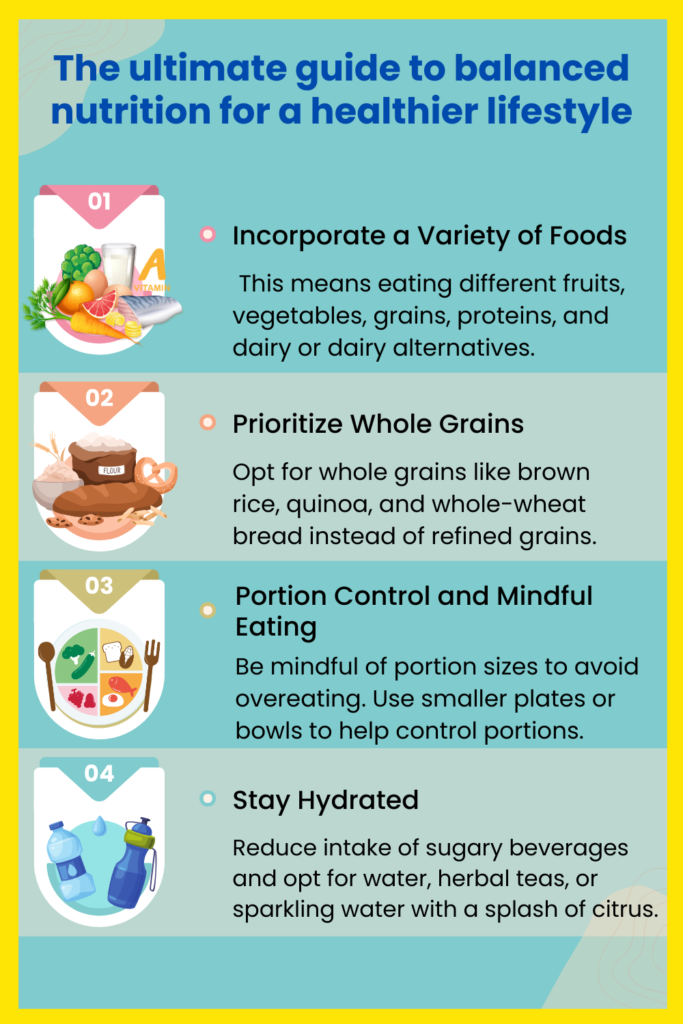
The Ultimate Guide to Balanced Nutrition for a Healthier Lifestyle
Achieving a healthy lifestyle starts with balanced nutrition. This guide will walk you through key tips to improve your daily eating habits, support your wellness goals, and promote long-term health.
1. Incorporate a Variety of Foods
A balanced diet means consuming a wide range of nutrients from different food groups. Ensure your meals include a colorful variety of fruits, vegetables, whole grains, proteins, and dairy or dairy alternatives. This diversity in food choices helps you get essential vitamins, minerals, and antioxidants needed for optimal health. For instance, leafy greens provide vitamins A and K, while lean proteins like chicken and beans supply important amino acids for muscle repair.
2. Prioritize Whole Grains
Whole grains are an essential part of a nutritious diet. Unlike refined grains, whole grains retain their nutrient-dense outer layer, making them richer in fiber, vitamins, and minerals. Incorporate whole grains like brown rice, quinoa, oats, and whole-wheat bread into your meals. These foods can help improve digestion, stabilize blood sugar levels, and reduce the risk of heart disease. Swap refined grains for whole grains to enhance your overall nutrient intake.
3. Practice Portion Control and Mindful Eating
Being mindful of portion sizes is crucial to avoid overeating, which can lead to weight gain and other health issues. Use smaller plates or bowls as a strategy to manage portions and slow down your eating pace. Mindful eating encourages you to savor each bite, helping you recognize when you’re truly full and preventing overconsumption. Listening to your body’s hunger cues can lead to a more satisfying eating experience without feeling deprived.
4. Stay Hydrated
Proper hydration is vital for maintaining energy levels, digestion, and overall body function. To stay hydrated, aim to drink plenty of water throughout the day and limit sugary beverages like sodas and energy drinks. Opt for water, herbal teas, or sparkling water with a splash of citrus for a refreshing, hydrating alternative. Dehydration can often be mistaken for hunger, leading to unnecessary snacking, so keeping hydrated may also help with better appetite control.
By incorporating these practices into your daily routine, you can foster a balanced and healthier approach to eating, supporting your overall well-being and helping you feel your best every day.